
Can a fine-tuned Google Business Profile bring in more business than your own website? Google My Business, now Google Business Profile, is key for local search, Maps, and voice results. This guide covers the necessary steps to claim, verify, and optimize your listing. It aims to improve your exposure and conversion rates.
More information about GMB SEO company
Utilize this guide to improve your local ranking. This helps with refining relevance, prominence, and distance factors. By following it, you can increase calls, visits, and bookings while meeting Google’s policies.
The checklist includes important actions like claiming your listing and adding accurate information. You will also discover how to select categories, add images and virtual tours, and list items and services. Furthermore, it discusses turning on messaging, using Reserve with Google, connecting Google Ads or Merchant Center, and URL tracking. Moreover, it explains how to monitor feedback and insights for ongoing improvement.
Understanding The Value Of Google Business Profile For Local SEO
A well-maintained profile is key for local customers. Google Business Profile shows photos, hours, reviews, and Q&A in Search and Maps. These elements can lead to calls, driving directions, and bookings even without a website visit.
Knowing what boosts your profile is important. Update name, address, and phone first. Add fresh photos and timely posts to improve visibility. Utilize a local SEO checklist to ensure accuracy and consistency.
Google uses your profile differently in Search, Maps, and voice assistants. In Search, you see the local pack and knowledge panels. Maps focus on proximity and ratings. Voice tools offer immediate responses.
Searches with local intent often show the map pack instead of websites. A strong Google Business Profile can capture clicks, calls, and directions. This is vital for businesses relying on walk-ins and immediate bookings.
SGE, or Search Generative Experience, is changing how results appear. AI Answers and local AI results could present your business info at the top. Ensure you fill in the Services, Menu, and Description fields for AI to utilize in responses.
Images and reviews are becoming more critical due to AI. Having a consistent flow of real reviews and quality images enhances relevance. Apply GMB advice to ensure descriptions are brief, services are detailed, and media is fresh for better answers.
The table below compares how profiles impact discovery and priorities for each platform.
| Medium | Key Signals | Best Optimization Step |
|---|---|---|
| Google Local Search | Categories, feedback, relevance, distance | Complete categories, encourage reviews, update hours |
| Maps | Proximity, star rating, recent photos | Maintain accurate data, upload weekly photos |
| Voice Search | Brief details, phone, schedule, ratings | Shorten bio, check contact and hours |
| Generative AI Results | Description, services, photos, review snippets | Fill description/services, ask for new reviews |
Business Eligibility For Google Profiles
Before you start, check if your business fits Google’s rules. It must be a real place where customers can visit. Establishments such as Starbucks, Walmart, and law offices qualify. Ensure your name and signage match how people recognize you.
Not every business can have a Google Business Profile. Online stores and real estate listings don’t qualify. It’s important to delete listings that don’t meet the rules to adhere to GMB best practices.
Consider where you want to list your business. If customers visit you, use a physical address. If you go to them, select a service-area business. Some businesses, like FedEx Office, can use both.
Service-area listings can have up to 20 locations. Use city names, postal codes, or regions to show where you work. Doing this supports local search efforts and adheres to Google’s advice.
Note that your business needs to be operational or opening shortly. Only owners or those authorized can manage your profile. Have transparent records regarding who owns the business. This helps prevent issues with Google down the line.
How To Find, Claim, Or Create Your Listing
Start by searching Google with your exact business name plus city and state. Try prior names, phone numbers, and addresses if you moved or rebranded. Look for a knowledge panel on the right side of search results. A visible panel typically indicates an existing listing to review or claim.
Searching Google and identifying existing knowledge panels
Type variants of your name to catch duplicates or old entries. If the knowledge panel shows accurate info, verify ownership to secure control. Should details be wrong, note necessary corrections before claiming or updating.
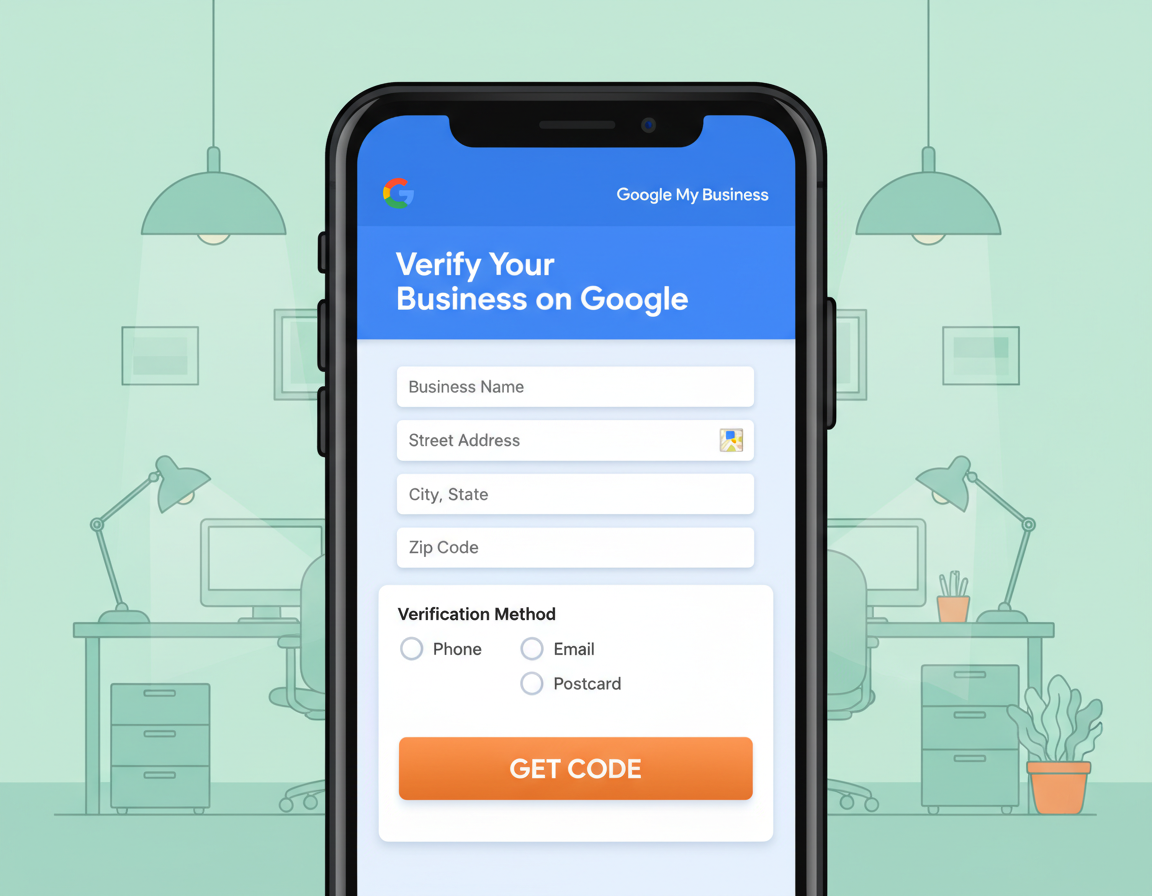
Creating a new listing on Google Business Profile
Log in to your Google account and access the Google Business Profile setup. Use an account tied to your business domain if possible to minimize future access issues. Add the official business name, address or service area, business category, phone number, website, hours, and a clear description.
Fill every relevant field. Complete entries boost local relevance and help you enhance the GMB listing for customers and search. Upload current photos and set accurate hours to avoid customer confusion.
Claiming an unclaimed listing and requesting ownership when needed
If the listing is unclaimed, click “Own this business?” or “Claim this business” from the knowledge panel. Proceed with the prompts to verify your relationship to the company. Should the panel show another owner, use the request access link within your account.
When you request ownership, the current owner gets an email and has seven days to respond. Track the request status in the dashboard. If access is denied or unanswered, contact Google Business Profile support and follow the appeal path to request ownership. Have documentation ready to validate your claim.
Quick GMB profile tips: maintain consistent NAP data, use a business-domain Google account, and monitor the listing after claiming. Actions like these simplify finding GMB entries, claiming records, and optimizing content for local visibility.
Proven Verification Methods For GMB
Getting your listing verified is key for local visibility. Verifying GMB protects your business from unauthorized edits. Additionally, it activates special features within the profile settings. Select the right method for your business size and location, and follow GMB best practices to prevent delays.
Postcard validation is the default method for most physical stores. Google sends a postcard with a code, which usually arrives within 14 days. Do not make major listing edits while the postcard is in transit. Enter the code in Google Business Profile to finalize verification. Should the card fail to arrive, ask for a replacement and double-check the address for faster delivery.
Call and email options appear when Google offers them. Verifying by phone involves a text or auto-call to your number. Pick up and type in the code to complete. Email verification involves sending a code or button to a linked account. These methods are faster than mail but only available in select cases.
Search Console instant verification works when the same Google account controls a verified website URL in Google Search Console. This option lets you skip the postcard step and complete verification instantly through your account.
Live video verification is reserved for special cases. Google may schedule a Google Meet or Hangouts session to see live views of the premises, logo, equipment, vehicles, or tools for service-area businesses. Prepare clear visual evidence and have a representative ready to answer questions.
Bulk location verification helps chains and franchises with 10 or more sites. Organizations complete a bulk upload and provide required documentation to verify multiple listings at once. Adopt this for scalable control and to follow best practices for multi-site firms.
The My Business Provider scheme allows authorized organizations like Chambers of Commerce and banks to create verification tokens for members. Resellers, SEO agencies, and consultants don’t qualify. Note that the Google Trusted Verifier program has been discontinued, so rely on current official routes.
| Method of Verification | Typical Use Case | Timing | Action Required |
|---|---|---|---|
| Postcard | Most storefronts | Up to 14 days | Verify address; input code |
| Telephone | Locations with phone lines | Minutes | Take call/SMS; type code |
| Listings with email access | Fast | Click verify or input code from email | |
| GSC | When site URL is verified in Search Console | Immediate | Use same Google account to claim listing |
| Video call | Specific/Remote cases | Scheduled | Show live video of site |
| Bulk upload | Chains (10+ sites) | Varies by review | Upload data & docs |
| My Business Provider | Members of approved organizations | Variable | Obtain token from provider for member listings |
Stick to GMB verification rules to maintain listing stability. Ensure contact info and addresses are current before starting. Avoid editing while verification is pending. After verification, apply GMB best practices like accurate categories and regular photo updates to maximize search and Maps performance.
Handling Users, Access Levels, and Group Locations
Good account governance keeps listings secure and consistent. Establish rules regarding who edits data, answers reviews, and publishes posts. Use role-based access to limit risk while enabling teams to act quickly on updates and customer interactions.
Primary owner, owner, manager, and site manager each have distinct permissions. The primary owner has full control and cannot be removed unless ownership is transferred. Owners have similar rights, including adding/removing users and deleting listings.
A manager can edit business details, posts, and services but cannot manage users or delete the profile. A site manager has limited edit rights such as uploading photos, publishing posts, and responding to reviews, with view-only access to many settings.
Adhere to best practices by granting the lowest necessary privileges. Don’t give owner access to external agencies unless totally needed. Keep the business as primary owner to prevent accidental loss of control or listing deletion when third parties change roles.
Create a recurring audit process to review who can access each listing. Delete old accounts, check permissions after staff turnover, and record ownership transfers. Regular audits reduce the chance of fraud and support consistent GMB listing optimization across locations.
For businesses with many locations, use location groups to centralize control. Create a group in the Google Business Profile dashboard, move listings into that group, and assign users at the group level to apply permissions to multiple sites at once. This approach simplifies workflows for franchises, retail chains, and multi-office firms.
| Access Level | Permissions | Assignment Case |
|---|---|---|
| Main Owner | Total control, transfers, user mgmt, deletions | Execs or admins needing permanent access |
| Business Owner | Manage users, edit settings, delete listings | Senior staff managing key changes |
| Listing Manager | Edit info, posts, services, reviews | Marketing staff doing daily tasks |
| Location Manager | Limited edits: photos, posts, review responses, view insights | On-site staff or store managers who handle local interactions |
When you manage GMB users, document each access level and reason for granting it. Use location groups to streamline permission changes and accelerate GMB listing optimization across multiple addresses. These actions follow GMB best practices and lower the risk of expensive errors.
Google My Business Optimization Checklist
Use this checklist to make minor updates that boost local visibility and improve GMB listing optimization. These points focus on accuracy, strategy, and hours that fit GMB ranking factors. Follow each step consistently across your website, directories, and marketing channels to bolster your local SEO checklist.
Complete and consistent NAP (name, address, phone)
Match the business name to storefront signage, legal records, and the website. Do not insert keywords, service lines, or city names into the official name. Use a single street address format everywhere and verify it with address-validation tools.
List the working local number as the Primary Phone if you can. If using call tracking, make it a secondary number unless it’s the main line customers call. Keep every NAP field identical across profiles to reduce confusion and protect ranking signals in your local SEO checklist.
Choosing categories with strategy
Select the most precise primary category. That single choice strongly affects how Google classifies and ranks your listing. Add all relevant additional categories that truly reflect services you provide.
Keep the primary category consistent across multiple locations. Audit competitor categories with tools such as the Phantom extension to spot gaps and opportunities. This category strategy ties directly into GMB listing optimization and the broader GMB ranking factors.
Refining business hours, holiday hours, and short names
Enter regular business hours customers can rely on. Add special hours for holidays, seasonal shifts, and events so searchers see accurate availability. Seasonal businesses should use special hours instead of changing the regular schedule.
Create a short name up to 32 characters for simple sharing and direct review links like g.page/shortname/review. Ensure the short name/hours match on social media, contact pages, and ads for consistency.
| Component | Action Step | Why it matters |
|---|---|---|
| Business Name | Use exact storefront/legal name | Avoids bans, builds trust |
| Address Format | Uniform address format | Better citations & mapping |
| Phone Number | List operational local number | Boosts user experience and accurate call tracking |
| Additional Phones | Add tracking or alt lines as extras | Clear contact & metrics |
| Main Category | Choose the single most accurate option | Directly affects ranking and relevance |
| Additional Categories | List extra services | More search coverage |
| Regular Hours | Set public hours | Reduces confusion and missed visits |
| Special/Holiday Hours | Schedule exceptions in advance | Prevents bad user experiences and negative signals |
| Profile Name | Create up to 32 characters | Easier sharing |
Improving Listing Media: Photos, Products, Services, And Dining Menus
High-quality visuals and product details make your Google Business Profile stand out. Use a steady photo cadence and full product or service entries. These steps help keep your listing fresh and useful.
Image categories and schedule
Begin with a complete initial set: one logo, one cover image, three team shots, and more. Professional images build trust. Bad images can decrease clicks and conversions.
Upload photos regularly. Google considers upload frequency for ranking. Aim to add new images every two to four weeks.
Entries for products, services, and food
Employ the Products and Services sections if possible. Create clear collections and add each item with a name, price, and description. Keep descriptions customer-focused and keyword-rich.
Restaurants should enter menu items directly in the profile, not just as a PDF link. This helps Maps and the Search Generative Experience surface relevant snippets.
360 tours and pro photos
Hire a Google pro for an indoor Street View tour. Hotels, restaurants, salons, and boutiques frequently see strong increases in interest from tours. Google states virtual tours can greatly increase reservations and visual presence across Search and Maps.
| Item | Min Qty | Frequency | Benefit |
|---|---|---|---|
| Brand Logo | 1 | When brand changes | Establishes brand recognition in profile and search results |
| Cover Image | 1 | Quarterly or with seasonal campaigns | Controls first visual impression on Maps and Knowledge Panel |
| Team photos | 3 | 1-3 months | Builds local trust and humanizes the business |
| Interior photos | 3 | Monthly to quarterly | Shows ambiance and helps set customer expectations |
| Outside Photos | 3 | Quarterly/Signage change | Easier to find location |
| Item Photos | 3+ | 2-4 weeks | Highlights items & converts |
| Service Entries | All primary offerings | New items/prices | Boosts relevance & optimization |
| Menu items (restaurants) | Top dishes | Seasonal/Monthly | Feeds Maps and SGE, boosts click-to-book and orders |
| 360 Tour | 1 (recommended) | As business layout changes | Boosts visuals & bookings |
Apply these GMB best practices to optimize your GMB listing content. Sharp images, correct data, and a tour make for a better profile and user experience.
Refining Links, URLs, And Conversion Tracking
Profile links convert views to actions. A well-chosen URL and tracking plan help you measure calls, bookings, and form fills. Use these practical steps to improve conversions and support GMB listing optimization across single and multi-location setups.
Pick the right URL for each location. Single sites should link to a fast, mobile-friendly homepage. Multi-location brands should point each listing to a specific location landing page. Landing pages need https, a clear CTA, a visible phone number, and a short form.
Use appointment, menu, and booking links to reduce friction. Point the Appointment URL to a mobile-friendly booking or contact page. Eateries should link Menu URLs to HTML pages, avoiding PDFs. Check integrations with Reserve with Google or partners to ensure links work. These small steps will help optimize GMB listing actions.
Implement UTM parameters for exact tracking. Build campaign URLs with source=google, medium=organic, campaign=gmb and add a location identifier for multi-site campaigns, for example campaign=gmb5. Distinguish link types with content=primary, appointment, or menu. Monitor tagged visits in Analytics to attribute actions to the profile.
Analyze conversion paths and adjust. Compare landing page performance for bounce rate, time on page, and conversion rate. For weak pages, try simpler CTAs, less fields, and better speed. Regular checks and small changes will help you optimize GMB listing performance over time.
Adhere to GMB profile tips for link hygiene. Update URLs after redesigns, change booking links for new tools, and ensure menus are current. This boosts trust and aids long-term GMB optimization.
Reputation Management: Reviews, Q&A, And Business Attributes
Positive reputation signals make your business distinct. It’s important to get reviews, answer questions, and update attributes. These actions are key to any GMB optimization plan.
Ethical review generation
Request reviews in person following a great experience. Send a short email with a direct review link. Add review requests to receipts or texts when suitable.
Use reputable platforms like BrightLocal or Podium to send requests at scale. Consistently follow Google review policies. Show customers how their feedback aids you.
Replying to feedback, good or bad
Thank customers for positive feedback quickly. For complaints, stay calm and acknowledge the issue. Offer to solve the problem offline and give clear next steps.
Publicly solving problems shows you care. It’s a key part of GMB best practices for reputation.
Managing Q&A and business attributes
Answer common queries with the Q&A feature. Upload probable questions and their answers. This way, prospects see accurate info first.
Configure attributes such as wheelchair access and languages in Info > Attributes. Watch for user-suggested attributes and correct any mistakes quickly. Accurate attributes improve the user experience and support Google My Business optimization.
Consistently follow this GMB profile tips checklist. Small, consistent actions lead to big gains in search and Maps. Reputation work is part of ongoing GMB optimization for lasting local success.
Local Search Signals: Listings, Schema Markup, And Competitor Audits
Strong local signals help Google connect a business to nearby searchers. Focus on consistent citations, accurate schema, and a thorough competitive audit to improve visibility. Align on-page and off-page signals with your profile using the checklist below.
Creating uniform citations for better prominence
List your business on major directories like Yelp, Facebook, Yellow Pages, and industry sites. Ensure NAP is identical everywhere. Inconsistent listings confuse Google and dilute GMB ranking factors.
Track citation sources and correct mismatches as part of routine GMB listing optimization.
Adding LocalBusiness schema and checking markup
Add LocalBusiness schema to each location page to mirror the Google My Business optimization details. Include address, phone, opening hours, geo-coordinates, and aggregateRating markup. Validate schema with structured data tools to avoid errors.
Accurate markup helps search engines link page content to the GMB profile.
Competitor audit steps: categories, review benchmarks, and proximity checks
Audit with BrightLocal or Local Falcon to find competitors. Compare primary categories, review counts, average ratings, and website links. Note which competitors use LocalBusiness markup and where they get links.
Use audit results to define realistic targets for reviews and category choices.
- Ensure NAP consistency on 10+ directories.
- Confirm LocalBusiness schema appears on every location page and is error-free.
- Set review benchmarks based on top three competitors in your radius.
- Prioritize location in category and landing page decisions as distance affects local rankings.
Update the local SEO checklist quarterly. Small citation fixes and clean schema reinforce GMB ranking factors. Regular competitive audits inform smarter GMB listing optimization and long-term Google My Business optimization.
Continuous Monitoring, Insights, And Tweaks
Regularly check your performance to make informed decisions. Use Google Business Profile Performance (Insights) to see how many views come from Search versus Maps. Also, track user actions like website clicks and calls.
Use geo-grid checks to gauge visibility in various zones. Tools like Local Falcon and BrightLocal show how your ranking changes. This helps you understand your visibility better.
Keep your profile up to date with a monthly routine. Make sure your hours are correct and post new photos. Plus, respond to reviews and post Google Posts or Offers.
Track tasks and frequency with a table. This makes it easier for teams to stay on the same page and not miss anything.
| Task | Cadence | Reason |
|---|---|---|
| Insights review (Search vs Maps, queries) | Monthly | Analyze traffic & adjust |
| Geo-grid rank checks (Local Falcon/BrightLocal) | Quarterly or after major changes | Map neighborhood visibility and detect proximity issues |
| Hours and special hours verification | Monthly Check | Ensure accuracy for customers and AI answers |
| Photos upload and refresh | Monthly Upload | Freshness & engagement |
| Respond to reviews and monitor Q&A | Every Week | Protect reputation and improve local signals |
| Publish Posts, Offers, or Events | Biweekly | Activity & visibility |
| Link Audit | Monthly | Track conversions |
| Duplicate listing and attribute audit | Every Quarter | Prevent conflicts and maintain consistent NAP |
Use these GMB tips daily. Small updates can make a big difference. Use the GMB optimization checklist to keep your team on track and watch your GMB grow.
Wrap Up
A fully optimized Google Business Profile is key for local visibility and attracting customers. The checklist spans claiming profiles to adding photos and menus. This makes sure you appear correctly in Search and Maps.
Keeping your profile up-to-date is also important. Use the local SEO checklist for reviews, Q&A, and other details. UTM tracking measures your success. Remaining consistent with these practices keeps your business visible as search technology changes.
Firms like Marketing1on1 can assist with GMB management. They can check your listings, track performance, and keep your profile updated. Regular checks and updates help your business stay competitive and attract customers when they search.
Related: Southern Oregon SEO Marketing Experts Share Insights